Monthly Archives: November 2013

Bird Puzzler #4: Family Affair

The fledgling bird in the following picture along with a sibling (not shown) and an adult (also not shown) were seen flitting around in some cottonwoods somewhere in Canada during the summer of 2013.

Your goal is to guess the species.

Clues

(See Puzzlers Page for Instructions on decoding clues)

Clue #1: Here is a recording of the begging calls (the continuous clicking sounds) made by the 2 young birds as they chased an adult bird through the cottonwoods.

Clue #2: Gur cvpgher jnf gnxra jvguva jnyxvat qvfgnapr bs bhe ubhfr va Pbdhvgynz, OP ba Pnanqn Qnl, 2013.

Clue #3: Lrf, vg vf n jneoyre.

ANSWER

The answer including a picture of all three birds can be found on the next page …

Golden Eagle Wind-Farm Story With a Happier Ending

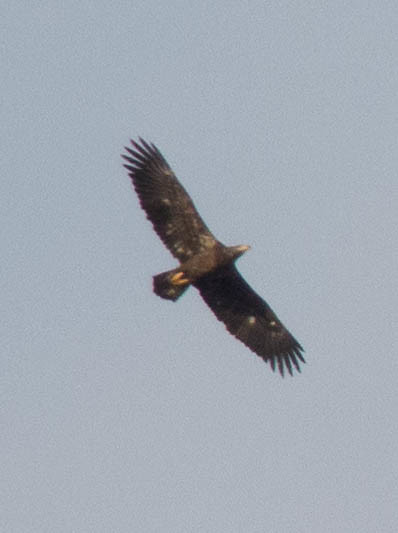
Young Bald Eagle over McDowell Sonoran Preserve

Young Bald Eagle over McDowell Sonoran Preserve, Scottsdale AZ, November 2013

I first found this story – US firm Duke Energy pays out over wind farm eagle deaths – on the UK raptor site: Raptor Politics.  If you do a search you will find this story widely reported around the world.

The NPR article – Duke Energy Pleads Guilty Over Eagle Deaths At Wind Farms – has a long list of comments which are entertaining to read.

From the Great Falls Tribune (Montana), this article – Duke Energy pleads guilty to killing eagles at wind farms – which has some data on similar fines paid by oil companies in the past for infractions of the migratory bird treaty.

Link

This is a follow-up to a previous post summarizing the September 2013 issue of Avian Conservation & Ecology that features several articles with the theme of human-related bird mortality in Canada.

A thread on one of the birding groups that I follow was discussing the effect of wind power on birds and one of the contributors pointed to the Barnard on Wind web site (creator: Mike Barnard).  More specifically they referenced the article: How significant is bird and bat mortality due to wind turbines?  This article, along with its extensive list of references, contains a wealth of information for anyone interested in understanding the effects of wind-power on bird populations.  One of the references in Mike’s article is, in fact, the same article on the effects of wind-power that is referenced by the September issue of Avian Conservation &Ecology.

It’s a great and informative site that’s definitely worth a bookmark.

Bird Puzzler #3: Hide and Seek

I was surprised when I learned this fact about this bird-species that breeds in BC and that is seen fairly regularly in the lower mainland.  This puzzler has no pictures, videos or sound recordings – just the following piece of information:

This is the only North American migratory species that, at the turn of the twenty-first century, had not yet revealed the location of its wintering grounds.

These wintering grounds were only finally discovered in 2010 and how it was done is very cool!

Identify that bird!

Clues

(See Puzzlers Page for Instructions)

Clue #1: Gurl bsgra unat bhg arne jngresnyyf.

Clue #2: Qb abg zvfgnxr gurz sbe ynetr, qnex-pbybherq fjnyybjf.

PuzzlerDecryptor

Clue and Answer Decoder

Answer

Gur zlfgrel oveq vf gur Oynpx Fjvsg.  N tebhc bs Pbybenqb erfrnepuref gnttrq 4 oveqf jvgu trbybpngbef va 2009 naq, jura 3 bs gurz jrer erpncgherq va gur fhzzre bs 2010, gur frperg bs gurve jvagrevat tebhaqf va gur Nznmba Onfva va gur jrfg bs Oenmvy jnf erirnyrq.

Zl bevtvany fbhepr jnf gur Rneoveqvat.pbz oybt  negvpyr ol Anguna Cvrcybj: Oynpx Fjvsg Jvagrevat Tebhaqf Qvfpbirerq (uggc://rneoveqvat.pbz/oybt/nepuvirf/3602).


Bird Puzzler #2: Sounds Like a (Rubber) Duck?

This puzzler comes in the form of a sound recording that I made on June 5.  Here is an excerpt of the recording:

Name the bird making the ‘squeaky toy’ call.

Some people will recognize the call immediately though I probably wouldn’t have guessed the species had I not actually witnessed the bird making it from a few feet away.

Clues

(See Puzzlers Page for Instructions)

Clue #1: Lbh zvtug svaq guvf oveq unatvat bhg va gur fnzr arvtuobheubbq nf gur nafjre-oveq sebz gur svefg chmmyre.
Clue #2: Guvf oveq vf jvqrfcernq npebff Abegu Nzrevpn.
Clue #3: Gur pnyy jvyy bayl or urneq qhevat oerrqvat frnfba.
Clue #4: N cvpgher bs gur orttvat syrqtyvat oveq pna or sbhaq ng gur sbyybjvat yvax: uggc://syvpxe.pbz/tc/94309556@A05/6vSaoz

Clue and Answer Decoder

Answer

Gur oveq vf n syrqtyvat Erq-jvatrq Oynpxoveq.

Urer vf n yvax gb gur shyy erpbeqvat fnirq ba Krab-Pnagb: uggc://jjj.krab-pnagb.bet/137659

The back-story

V jnf jngpuvat oveqf nebhaq gur cbaq ng gur Pbybal Snez jura V abgvprq n whiravyr syrqtyvat Erq-jvatrq oynpxoveq sbyybjvat na nqhyg znyr sebz gur gbc bs n ohfu qbja gb n cynpr va gur ohyehfurf (arfgvat fvgr creuncf) naq onpx ntnva.  V fnj gurz ercrng gur onpx-naq-sbegu plpyr gjvpr.  Gur znyr nccrnerq gb or whfg n onolfvggre jub jnf abg, ubjrire, srrqvat gur whiravyr.  Jura gur whiravyr jnf orttvat sebz gur ohfu-gbc, vg jnf va snpg cbvagrq njnl sebz gur nqhyg znyr.  Va gur erpbeqvat lbh pna urne gur znyr fbat frireny gvzrf nf jryy nf gur pbagvahbhf “fdhrnxl” orttvat bs gur whiravyr.  Arne gur raq bs gur erpbeqvat, gur nqhyg znyr yrnirf gur ohfu-gbc sbe gur ohyehfurf naq gur whiravyr vzzrqvngryl punatrf gb n 3-flyynoyr “jnvg-sbe-zr” pnyy naq sbyybjf pybfr oruvaq.

Bird Puzzler #1: From Trash to Treasure

[Based on the ‘Puzzler I’, originally posted to the Fraser Valley Birding forums on June 1, 2013] See the Puzzlers Page for more information.

I know that many birders enjoy puzzles associated with bird identification so I thought that I might be able to salvage an otherwise botched photo attempt that I almost deleted, resurrecting it as a challenging bird identification puzzler.

So take a look at the picture below and try to answer the following questions:

Question 1: Can you find the bird in this image?

Question 2: Can you identify the bird?

The only clue that I will provide now is that this picture was taken somewhere in the province of Ontario, Canada on May 24, 2013. I believe that there is enough information for you to make a stab at an identification.

Here’s the image:

Hint

Check out a higher resolution image. Click on the picture to get to the source picture on Flickr, look for and click on the three-dot icon and select the “View all sizes” option.

Clues

(See Puzzlers Page for Instructions)

Clue #1: Guvf cvpgher jnf gnxra arne Tnanabdhr, Bagnevb.

Clue #2: Vs lbh ghearq nebhaq naq ybbxrq va gur bccbfvgr qverpgvba lbh jbhyq frr gur sbyybjvat:

Clue #3: Gur oveq vf whfg orybj naq gb gur yrsg bs gur zvqcbvag bs gur vzntr. Vf sylvat njnl sebz gur pnzren (vg jnf fbzrjurer va gur frpbaq cvpgher nern jura V syhfurq vg naq vg gbbx bss).
Clue #4: Lbh fubhyq or noyr gb frr whfg n uvag bs gur oveqf yrt/sbbg pbybhe va gur shyy vzntr.).

Clue #5: Gur yrtf/srrg ner oevtug benatr (ng gung gvzr bs lrne).

Answer

Vg jnf n Terra Ureba va shyy oerrqvat pbybhef. V vavgvnyyl syhfurq vg juvyr zbivat guebhtu gur haqretebjgu gb trg n orggre ybbx ng gur ornire cbaq (uvag: znefu oveq). Gur ureba syrj ol ng rlr yriry 40 – 50 srrg njnl jvgu vaperqvoyl benatr yrtf naq n evpu qnex znagyr – na hasbetrggnoyr naq tbetrbhf fvtug. Vg frrzrq gb frggyr qbja fb V gevrq gb dhvrgyl svaq vg ntnva ohg bayl znantrq gb syhfu vg bapr zber (gbb zhpu bs n uheel V thrff). Gung jnf jura V znqr gur svany ynfg qvgpu ‘fubg-va-gur-qnex’ rssbeg gung erfhygrq va guvf cvpgher. V jnf fhecevfrq jura V mbbzrq va naq npghnyyl sbhaq vg vapyhqvat (vs lbh fdhvag) n srj benatrl-lryybj cvkryf jurer gur yrtf jrer.

PuzzlerDecryptor

Five Harlequin Ducks Video

My second outing with the Ken ‘s Birding Photography class took place August 31, 2013 and started in the same place as the first, at the Reifel Migratory Bird Sanctuary.  This time it ended at the Tsawwassen Ferry Terminal along the South side of the spit.  One of our last sightings was a small group of 5 Harlequin Ducks that were slowly working their way down the length of the spit.

Besides lots of pictures, I took a minute long video with my camera that was sufficiently entertaining that I dressed it up using Microsoft Movie Maker, added some music (to replace the sounds of automobile traffic and birder chit-chat) and made it available for general consumption in the video window below and on both Flickr and YouTube (my first ever YouTube video).

So, without further ado, here are ‘5 Harlequin Ducks’:

Here are the other links:

5 Harlequin Ducks (Flickr: small 484 x 272)
5 Harlequin Ducks (Flickr: medium 854 x 480)

5 Harlequin Ducks (Youtube)

The streaming from Flickr and/or Youtube may not be very smooth so downloading a copy from the ‘Share’ menu or from one of the versions on Flickr and watching locally should lead to a noticeably better experience.

Enjoy!

The Peculiar Black Skimmer

The first time that we saw a Black Skimmer was in 2001. I was a novice birder and, while we had a copy of the Sibley Guide to Birds, we had never read it from cover to cover and so were unaware that a bird like the Black Skimmer existed. Nonetheless, there they were, 5 odd-looking birds, vaguely tern-like, sitting in the sand on the beach not far from the wharf in downtown Santa Barbara, California.

Since we rarely left home without Sibley, we quickly identified them as Black Skimmers. Over the next few years, we saw them frequently, usually at the same Santa Barbara location, in numbers ranging from a single bird to as many as 80.

Several Black Skimmer pictures recently showed up in my mailbox for identification taken by the spouse of one of JC’s work-colleagues while on a cruise along the coast of California. Seeing the pictures reminded me of our own encounters and of some of the bird’s more interesting and peculiar aspects.

Taking a Look

The following is one of the pictures from my inbox showing a pair of skimmers close up. From a distance they may look somewhat tern-like however up close there are several things that I find stand out.

Black Skimmers - Used with permission.  Copyright 2013 Kathy Deyell All rights reserved

Black Skimmers – used with permission. Copyright 2013 Kathy Deyell All rights reserved

First, it looks like they have no eyes which are just well hidden by the black cap.  Second, what appears as a forked tail on the right bird is just its extremely long wings crossing.  Finally, the bill, unique to skimmers, has a lower mandible that is longer than the upper and is hinged so that it can open wide. This facilitates the skimmers’ unique method of feeding by flying just above the water surface with the lower bill “skimming” the water (see picture).

When the bill touches a fish or other prey it snaps shut. This tactile hunting method works well with the skimmers preference for nocturnal hunting when their prey are more likely to be near the surface of the water.

The Black Skimmer has some additional surprises. It is the only bird known to have a vertical pupil like that of a cat. This is thought to be useful for protecting their eyes in the bright environment of the sandy beaches where they spend the day resting while giving them good nocturnal vision while hunting at night.

Another unexpected behaviour of the skimmer is its unique way of resting during the day (picture below) that has probably led more than a few observers into thinking that they were looking a dead or dying bird.

Black Skimmer Snoozing - Used with permission.  Copyright 2013 Kathy Deyell All rights reserved

Black Skimmer Snoozing – used with permission. Copyright 2013 Kathy Deyell All rights reserved

The Black Skimmer, being a social bird, is frequently found in colonies (often with gulls and terns).

Black Skimmers - Used with permission.  Copyright 2013 Kathy Deyell All rights reserved

Black Skimmers – Used with permission. Copyright 2013 Kathy Deyell All rights reserved

Skimmers Around the World

The Black Skimmer (Rynchops niger) is widespread, found throughout a large part of North and South America. In North America they are almost exclusively coastal, ranging North to around San Francisco in the West and Boston in the East. In South America the follow the coast to Chile in the west. In the east, however, they are not just coastal but are found throughout the Amazon Basin fishing the rivers.

Two other skimmer species, one in Africa (R. flavirostris) and one in India (R. albicollis), join the Black Skimmer as the only three skimmer species in the Family Rynchopidae. Their closest relatives are found in the families of birds that include gulls, terns, alcids (puffins, murres, etc.), skuas and a few others without representation in North America.

Having a Listen

One final Black Skimmer surprise. While I don’t recall having ever heard the Black Skimmer call during our many encounters, apparently it resembles the bark of a dog. You be the judge. Here are some recordings that I found on Xeno-Canto from different parts of their range (each link opens a new page/window at the Xeno-Canto site):

Brazil, Mato Grosso do Sul: Black Skimmer

USA, Florida: Black Skimmer colony (300+ birds)

Brazil, Amazonas: Flight calls of two Black Skimmers defending their nest

USA: New Jersey: Black Skimmers

Final Thoughts and Additional Information

The Black Skimmer is definitely one of my favourite birds to watch.  It has more unique aspects than any other North American birds that I can think of.  While not quite the bird equivalent of the platypus in terms of odd construction, it is a slam-dunk for inclusion in the category of Cool Birds!

Here are some other good Black Skimmer resources to check out:

Black Skimmer and Chick by Dan Pancamo

Dan Pancamo’s Black Skimmer picture set on Flickr.  It includes a large number of excellent pictures with chicks and juveniles such as the one on the left.

References

Gochfeld, Michael and Joanna Burger. 1994. Black Skimmer (Rynchops niger), The Birds of North America Online (A. Poole, Ed.). Ithaca: Cornell Lab of Ornithology; Retrieved from the Birds of North America Online: http://bna.birds.cornell.edu/bna/species/108
doi:10.2173/bna.108